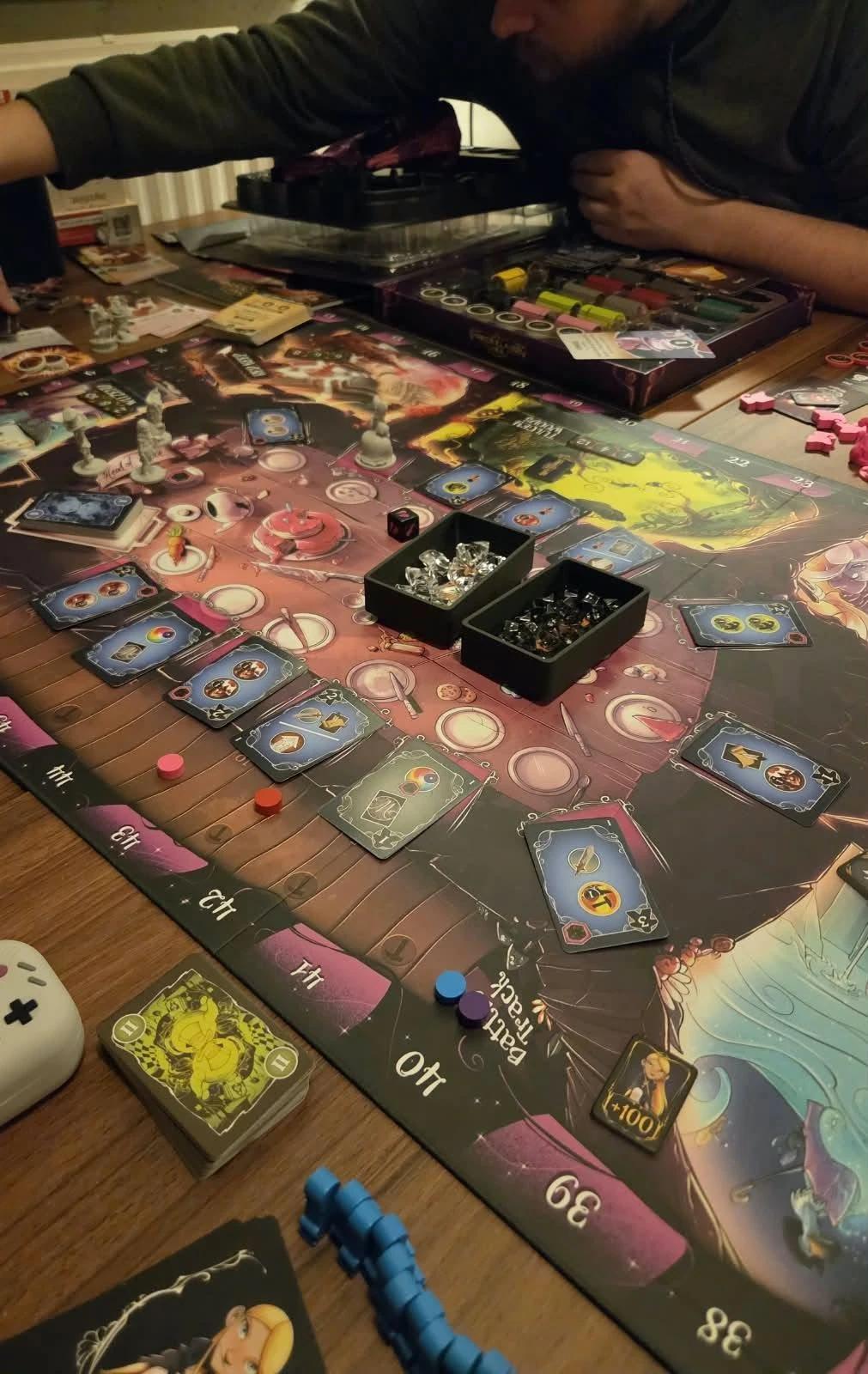
Board games against loneliness: a table for every kind of person
From quiet efficiency puzzles to loud social deduction, there's a board game for introverts, extroverts and everyone in between. Here's how to find your table.
By S. Abaza
In June 2025 the World Health Organization put a number on loneliness: about one in six people worldwide feel lonely, and loneliness is linked to an estimated 871,000 deaths a year. Young people feel it most. (WHO Commission on Social Connection)
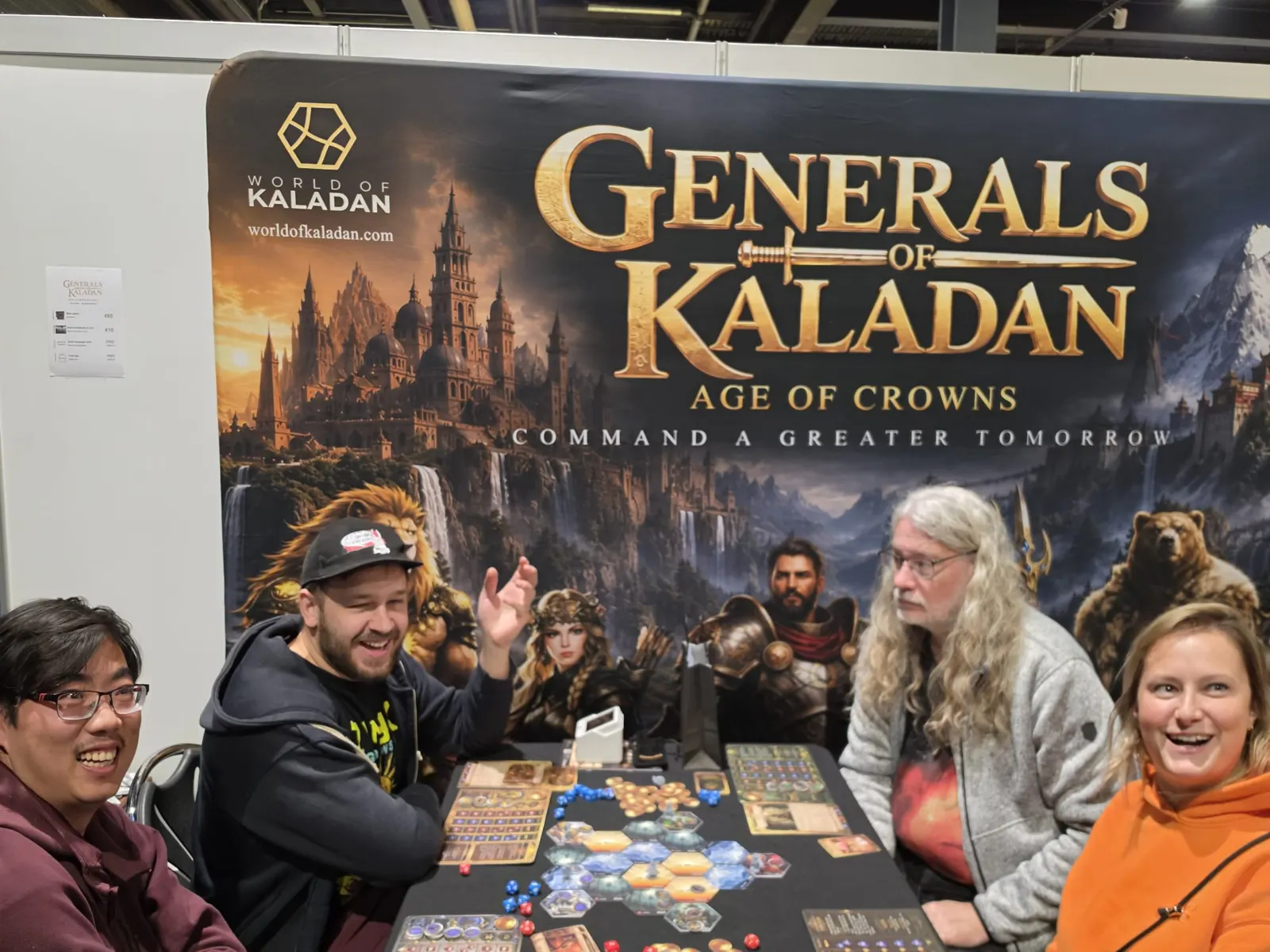
A board game won't fix that. But I've watched it happen at our stand, again and again: strangers sit down at a table, and an hour later they're laughing like old friends. A game gives people a reason to be in the same room, something to look at that isn't each other, and rules that tell everyone what to do next. For a lot of people, that's the hardest part of meeting someone new.
Photo: World of Kaladan
What I've also learned is that not every game suits every person. Put a quiet person in a loud bluffing game and they'll go home feeling worse. Put a talker in front of a silent puzzle and they'll be bored by round two. So here's how I think about it: a spectrum, from games where you barely speak to games that are nothing but talking.
The quiet table: efficiency puzzles
Good for: introverts, people who are new in town, anyone who finds small talk tiring.
At one end are the euro games, where each player builds their own engine and the game is mostly a puzzle of doing the most with what you've got. There's very little direct interaction: nobody attacks you, nobody needs to bluff, and nobody puts you on the spot.
 Box art via BoardGameGeek
- Ark Nova (1–4 players). Everyone builds their own zoo, and the conversation happens naturally around it: "How did you get that many points?", "Oh no, I needed that card", "Show me your enclosures".
- Terraforming Mars (1–5). You each run a corporation turning Mars green. You share a planet, but you mostly work on your own tableau of cards.
- Wingspan (1–5). Attract birds to your own nature reserve. It's calm, beautiful and very easy to teach, a perfect first game for someone who doesn't play games.
- Cascadia (1–4). Lay out habitats and animals in your own corner of the Pacific Northwest. Short, gentle, and you can chat the whole way through.
These games are underrated as social games. You're together without the pressure to perform. The game carries the evening, and you can talk as much or as little as you like. For someone who finds a party exhausting, sitting side by side over a puzzle can be the gentlest way back into company. And you'll find people you get on with, because the same people keep coming back to the same games.
The middle of the table: something for everyone
Good for: mixed groups, couples where one is shy and one is not, friends who want to talk and also play.
In the middle are games with real interaction on the board, but where you never have to be the loudest person at the table.
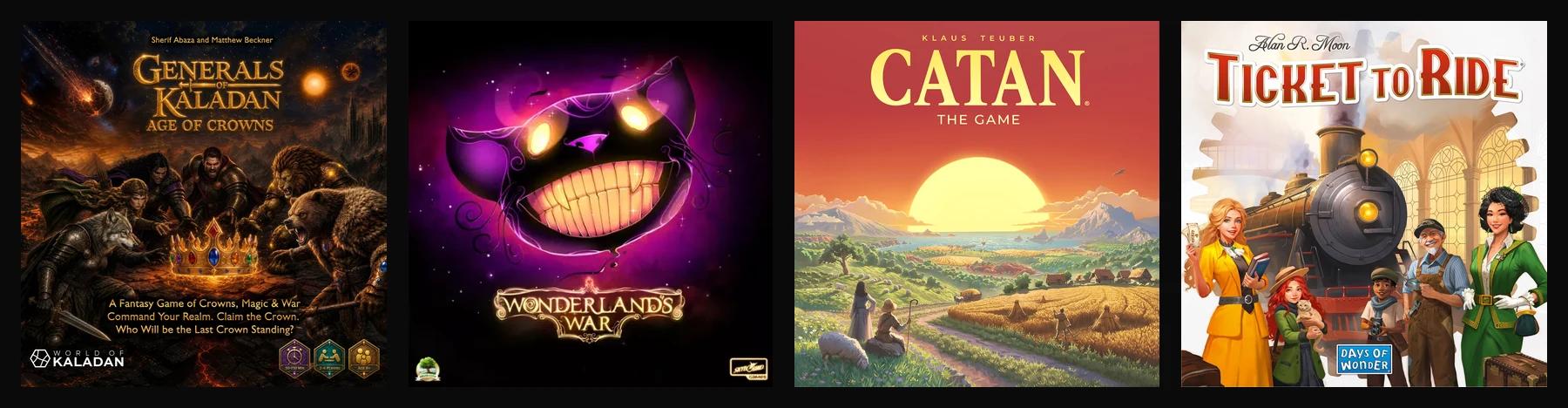 Box art: World of Kaladan; others via BoardGameGeek
- Generals of Kaladan: Age of Crowns (2–6). Our own game, so I'm biased. It's a light strategy skirmish game where every turn touches someone else: you move, swap or attack, and the whole table leans in. Then the dice come out, and so does the banter. Cheers, groans, "you rolled what?", and grudges that last exactly one turn. Once the battles start, nobody knows how it will end, except that one General will be crowned ruler of Kaladan. You can play quietly and let your moves speak for you, or make deals across the table. And in team mode nobody gets knocked out: you play on until your whole team falls.
- Wonderland's War (2–5). Everyone drafts at a chaotic tea party, then finds out in the battles whether their plan was any good. There's plenty of laughing and groaning, but the game does the work of keeping everyone involved.
- Catan (3–4). The classic. You need your neighbours' wood and sheep, so you have to talk and trade, but nobody asks you to lie.
- Ticket to Ride (2–5). Build train routes across the map. Easy to learn, with just enough "you took my route!" to get people laughing.
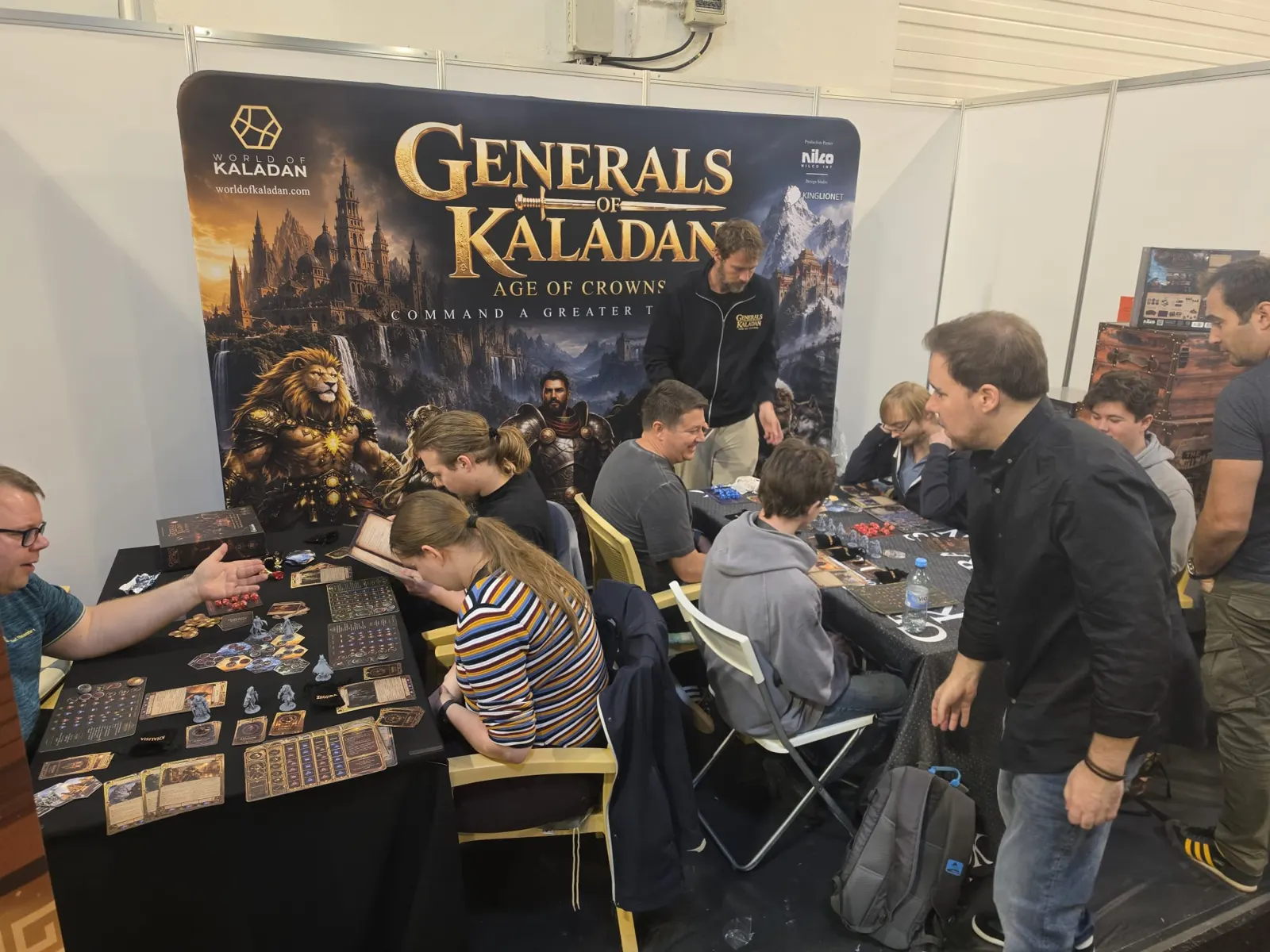 Photo: World of Kaladan
Games in the middle are the best ones to bring when you don't yet know who's coming.
The loud table: social deduction
Good for: extroverts, groups of 6 or more, anyone who loves reading people.
At the far end are the social deduction games, where the game is the conversation: accusations, alibis, wild guesses and dramatic reveals.
 Box art via BoardGameGeek
- Secret Hitler (5–10). A hidden team is trying to take over, and everyone else has to work out who to trust from what people say, how they vote and how they react.
- The Resistance: Avalon (5–10). Loyal knights and hidden traitors go on quests. Every vote is a chance to accuse someone.
- One Night Ultimate Werewolf (3–10). One night, one vote, ten minutes. It's the easiest way to try the genre.
- Blood on the Clocktower (5–20). Werewolf for big groups, run by a storyteller, where even dead players keep talking and voting until the end.
These games are brilliant icebreakers for people who enjoy talking. Ten minutes in, a room of strangers is arguing like family. But be honest with yourself and with your guests: for a shy person, being put on the spot and accused of lying isn't fun. Invite people to the loud table. Don't push them onto it.
Find your table
- If you get tired after a lot of conversation: try an efficiency puzzle like Ark Nova, Terraforming Mars, Wingspan or Cascadia.
- If you like company but don't want to be the centre of it: try a middle game like Generals of Kaladan, Wonderland's War, Catan or Ticket to Ride.
- If you love talking, bluffing and reading people: try social deduction, like Secret Hitler, Avalon, One Night Ultimate Werewolf or Blood on the Clocktower.
- If you're organising a night for strangers: start in the middle, then open a quiet table and a loud table as people find their feet.
Where to play
You don't need a group of friends to begin. There are more places to find a table than most people think, and every one of them is full of people who came on their own.
- Board game meetups. Regular evenings where anyone can turn up, bring a game or just join one. Meetup.com is probably the best place to find one near you: search "board games" plus your city, and you'll usually find a few groups, from casual Tuesday nights to heavy euro clubs.
- Board game cafés. Hundreds of games on the shelves, staff who will teach you, and often open game nights where they'll seat you with other players. Ideal if you don't own any games yet.
- Game nights at home. The cosiest table of all. Start small: two or three people, one game you know well, snacks.
- Game stores. Many local shops run open play evenings, demo days and tournaments. Ask at the counter.
- Libraries and community centres. More and more lend games and host free game afternoons. They're a gentle start for quiet tables and families.
- Conventions. For a whole weekend of games and strangers, go to a convention. SPIEL Essen in Germany and Spellenspektakel in the Netherlands are where we've watched hundreds of people sit down with strangers and stand up as friends. Most countries have smaller local ones too.
- Online, when you can't get out. On platforms like Board Game Arena you can play a lot of these games in your browser. It isn't the same as sharing a table, but on a bad week it's still company.
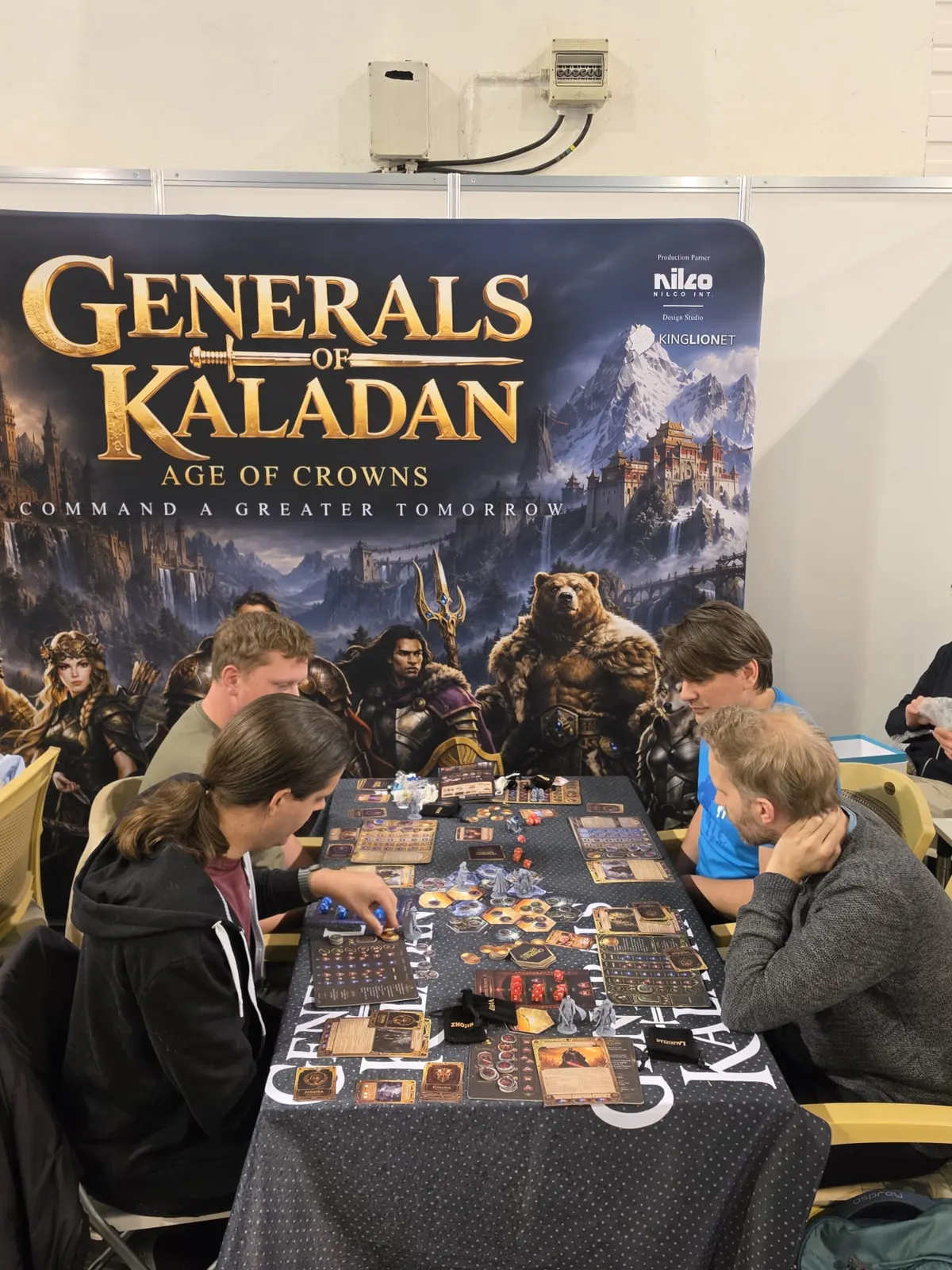 Photo: World of Kaladan
Wherever you go, most players will happily teach you. Say "I'm new and I'd love to learn something", and you'll be at a table in five minutes.
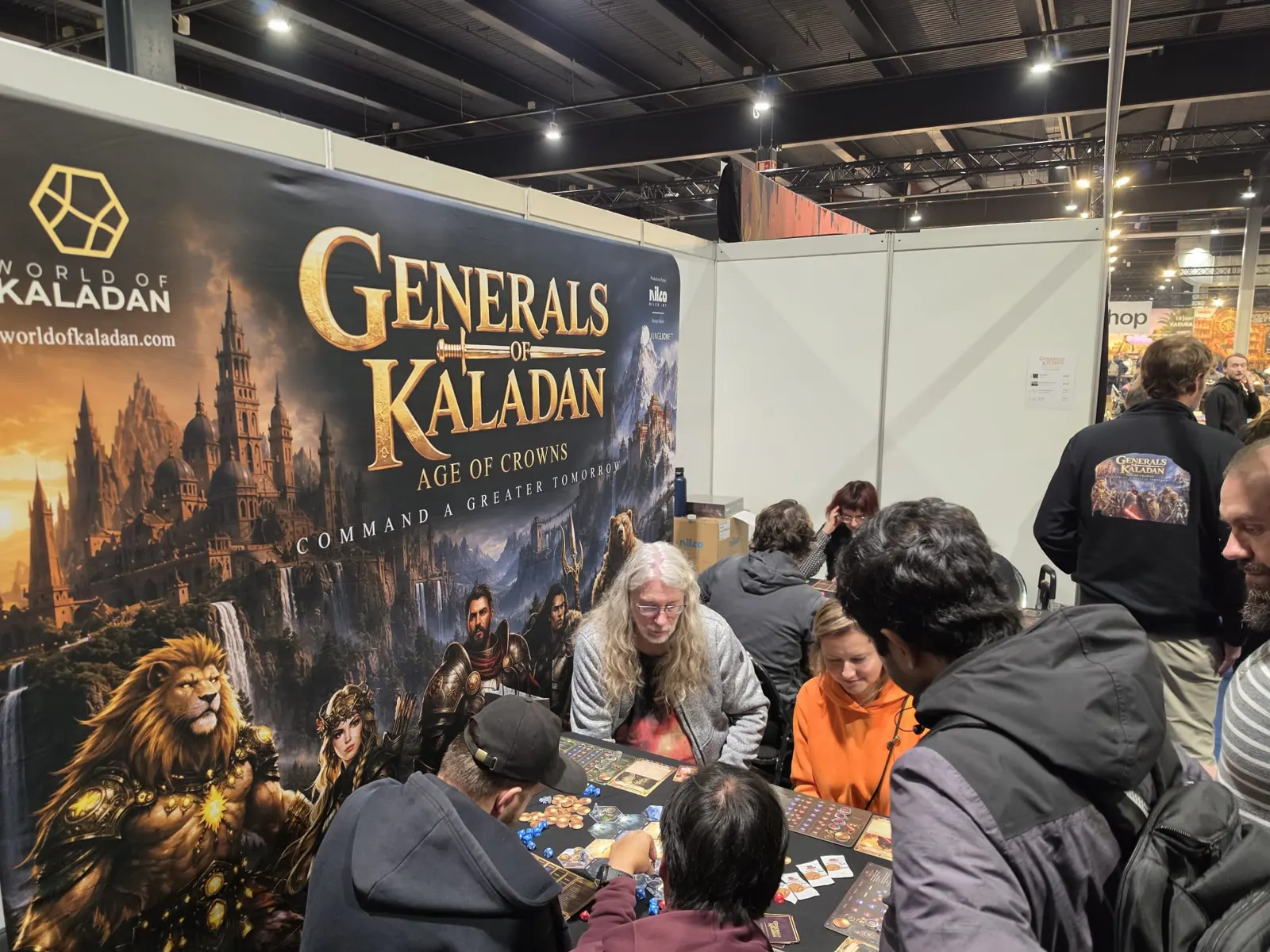 Photo: World of Kaladan
And if you're the one who already has the games: invite someone who doesn't. Pick a game that suits them, not you. The quiet colleague might love a zoo-building puzzle, and the new neighbour might be the best liar you've ever met.
Not every table needs a board game, either. Another company we admire for its work against loneliness is Timeleft, co-founded by Maxime Barbier. Every week, Timeleft matches strangers to sit down to dinner together. We'd love to see some of those tables in board game cafés one day.
Over to you
Tell us what kind of social gamer you are:
- Which table is yours: quiet, middle or loud?
- Which games are your favourites, and which one got you talking to strangers?
- Where do you play: at home, at meetups, in board game cafés, at conventions, or somewhere we haven't thought of?
Tell us on Instagram, Facebook or LinkedIn (we're @worldofkaladan). We read everything, and we'd love to find a few new tables of our own.
If you're after a game for the middle of the table, Generals of Kaladan: Age of Crowns plays with 2 to 6, in teams or free-for-all, and nobody is left out before the end.